

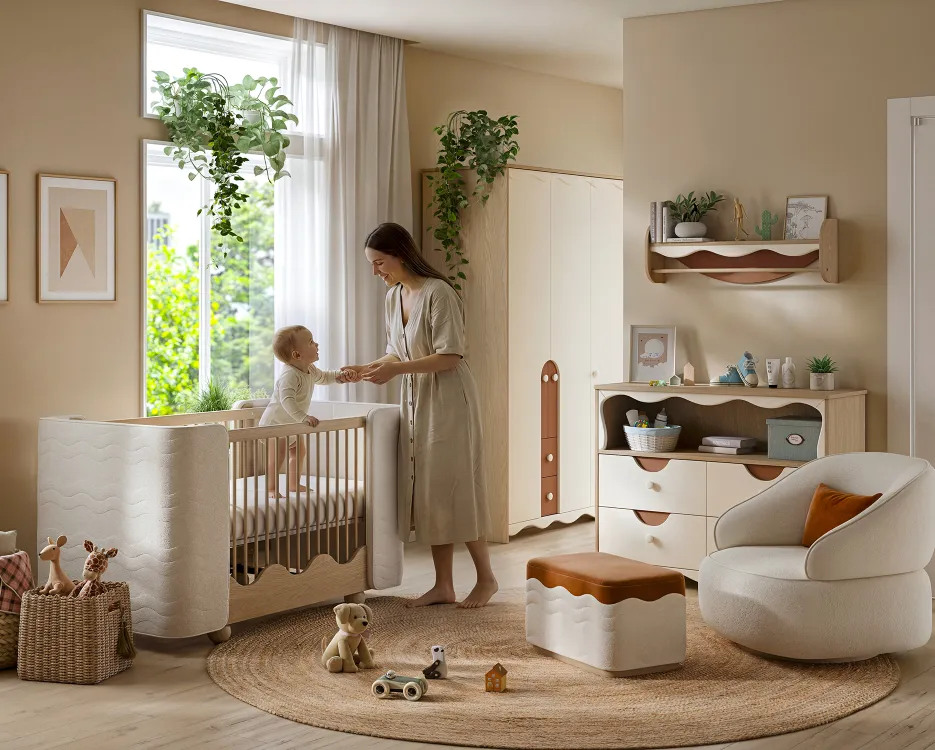
A child's room is a constantly evolving space of development from infancy to the teenage years; Newjoy's Flow series approaches exactly this journey — from the baby room to the teen room — with a single philosophy. According to psychologist Howard Gardner's theory of multiple intelligences, intelligence is not defined by a single measure but by different areas such as verbal, logical, visual-spatial, bodily, musical, social, intrapersonal and naturalistic intelligence. One of these areas can be more dominant at any age, and room design should adapt to this need as the child grows.
Infancy: A Safe Space for Discovery
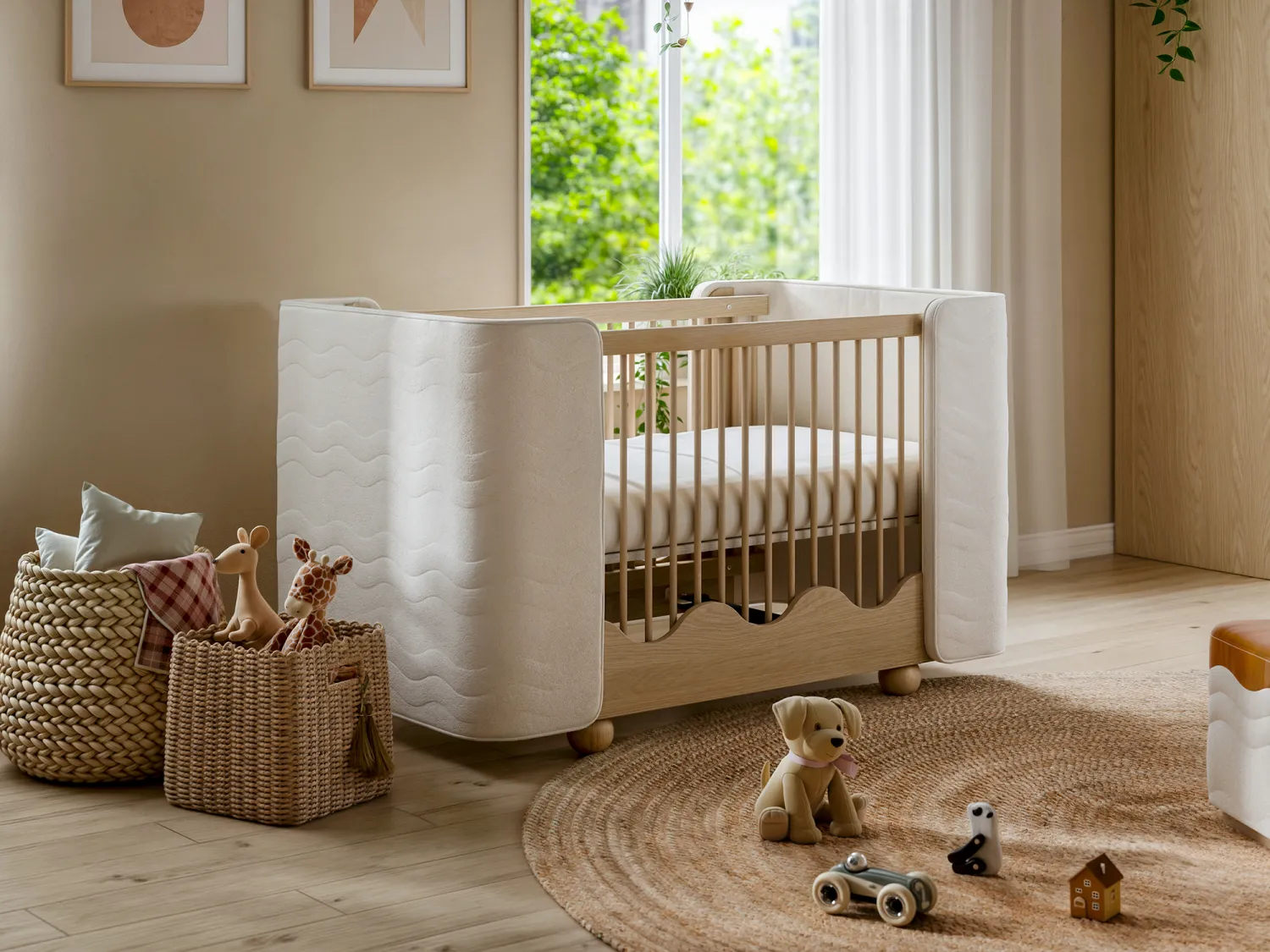
The top priority for a baby room is creating a simple, orderly space where the baby can safely explore. Since sensory development is at the forefront in this period, soft textures offering tactile variety and a simple, eye-level arrangement should be preferred. A baby room set that can easily expand as needs grow provides both practicality and safety in these first years.
School Age: Corners for Discovery and Expression
In the children's room period, tidy shelves and compartments where the child can organize their own belongings make a difference for a child with strong visual-spatial intelligence, while a child with prominent bodily-kinesthetic intelligence needs open space to move. Socially intelligent children enjoy a corner where they can play with friends, while more introspective ones enjoy a quiet reading spot. The right children's room set should be flexible enough to answer these different needs at once.
Teenage Years: Identity and Independence
As children grow, the room's role changes too. The teen room is no longer just a place to sleep or study; it becomes a space to discover one's own style and build independence. In this period when intrapersonal and social intelligence mature, a teen room set the young person can organize and personalize supports the process.
Common Ground with the Montessori Philosophy
This approach also aligns with the Montessori philosophy so often researched by parents: an arrangement that supports independence, where the child can move on their own and reach their belongings at every age. Both see the room not as a passive space but as an active area of development.
Newjoy's Flow series brings this developmental journey from infancy to the teenage years together in one design philosophy, with baby room, children's room and teen room options. If you are looking for an arrangement suited to your child's age and development, Flow is an option that reflects this approach.