

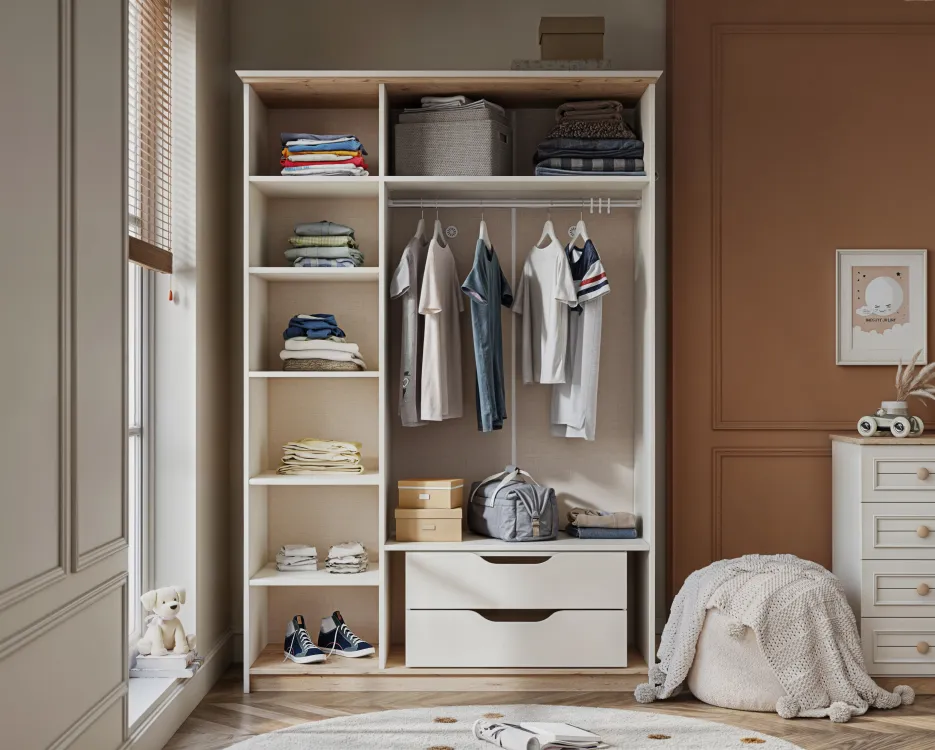
School has started, and the same scene repeats in many homes: the bag by the door, clothes on the chair, notebooks in a corner of the desk. Most parents see this as a matter of discipline; yet the problem is usually not laziness but an order built on a logic the child cannot reach. A well-planned children's room turns order from a parent's task into the child's own habit.
Everything Should Be Within the Child's Reach
The most common mistake is setting up order at adult height. If the hook is too high, the jacket ends up on the chair; if the top shelf is out of reach, the book stays on the desk. Keeping everything frequently used at the child's own height lets order form on its own, without having to say "put it away." Newjoy's Flow series, with its approach that designs the room as a space the child can manage independently, fits this logic directly.
Give the Bag a Fixed Place
The school bag is the item that moves around the most during the day. Assigning it a specific spot in the room (a hook, a shelf or a fixed area next to the desk) prevents two separate kinds of chaos: coming home in the evening and leaving in the morning. This spot should be close to where the child prepares for the next day, not near the door.
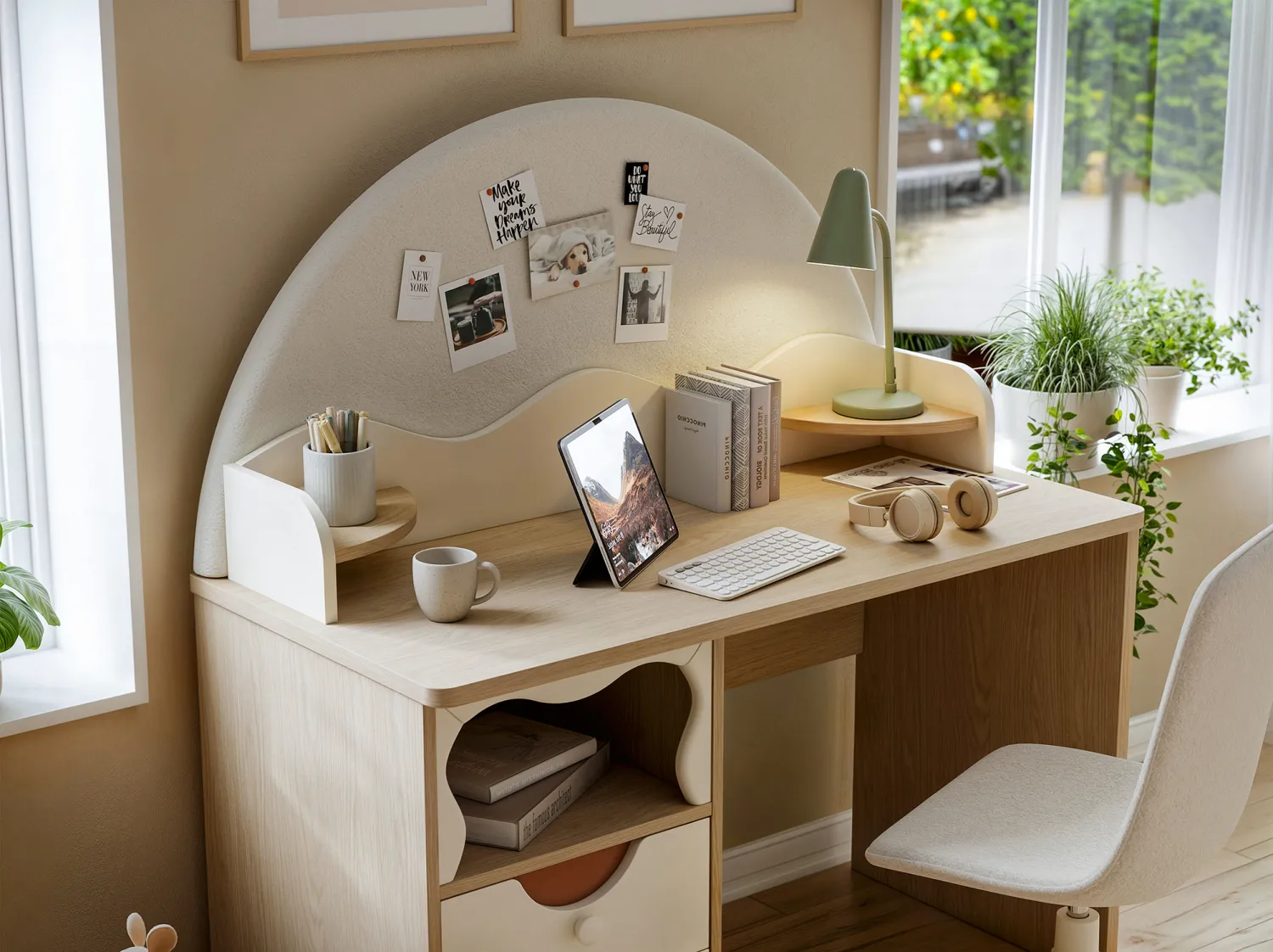
Divide the Wardrobe into Categories
For children to choose and put away their own clothes, the wardrobe needs to be easy to understand: school clothes in one section, everyday clothes in another, underwear in a separate drawer. Labeling the compartments, or using picture cues at younger ages, makes this separation stick. A children's room set with spacious, well-organized compartments is the biggest help in setting up this system.
Fewer Things, Easier Order
The more things a room holds, the harder it is to tidy. Removing unused toys and outgrown clothes at the start of the term makes it easier for everything else to find its place. Involving the child in this sorting also helps them notice what they actually use.
Cut the Evening Routine to Five Minutes
To keep order sustainable, a short, clear tidying moment at the end of the day is enough: hanging the bag in its place, sorting clothes, clearing the desk. This routine of no more than five minutes makes mornings start much more calmly.
A Room That Fits Their Style Is Easier to Own
When children feel the room is theirs, keeping it tidy becomes easier too. For families looking for a natural, calm atmosphere there is Bohem, while the Polo series appeals to different tastes; each offers an alternative with its own character. Explore all children's room models to choose a room where your child can build their own order; for younger siblings, take a look at the baby room collections, and for growing children, the teen room collections.