

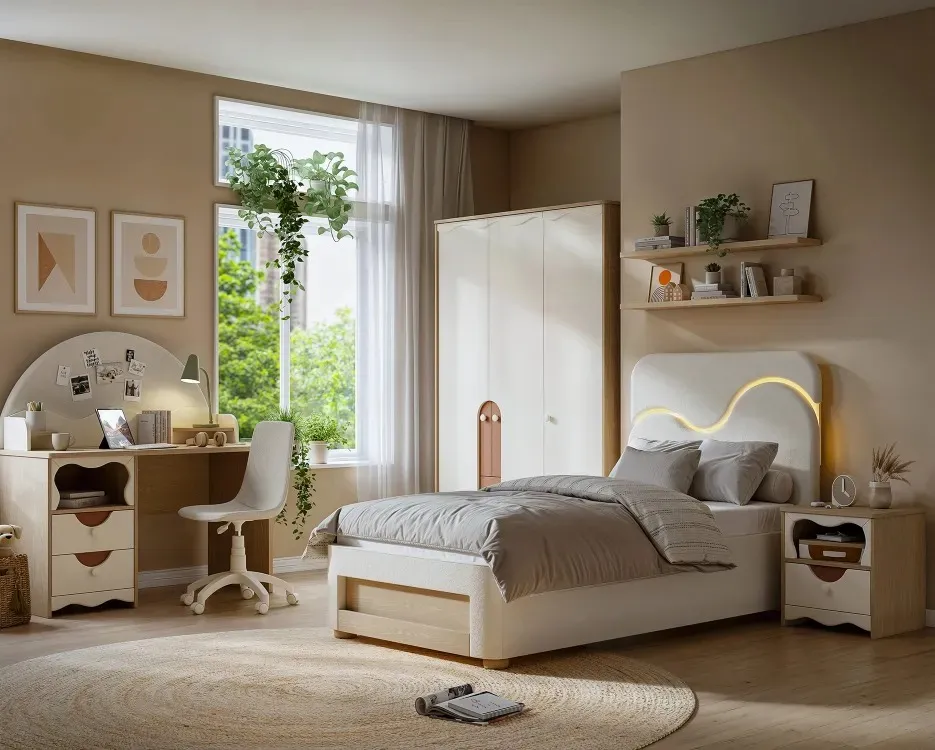
The Montessori approach is one of the most researched baby room concepts of recent years — and its popularity comes not from being a fad but from supporting the child's independence from infancy. So what should you pay attention to when setting up a Montessori baby room? Here are the core principles:
The Floor Bed: The Heart of the Room
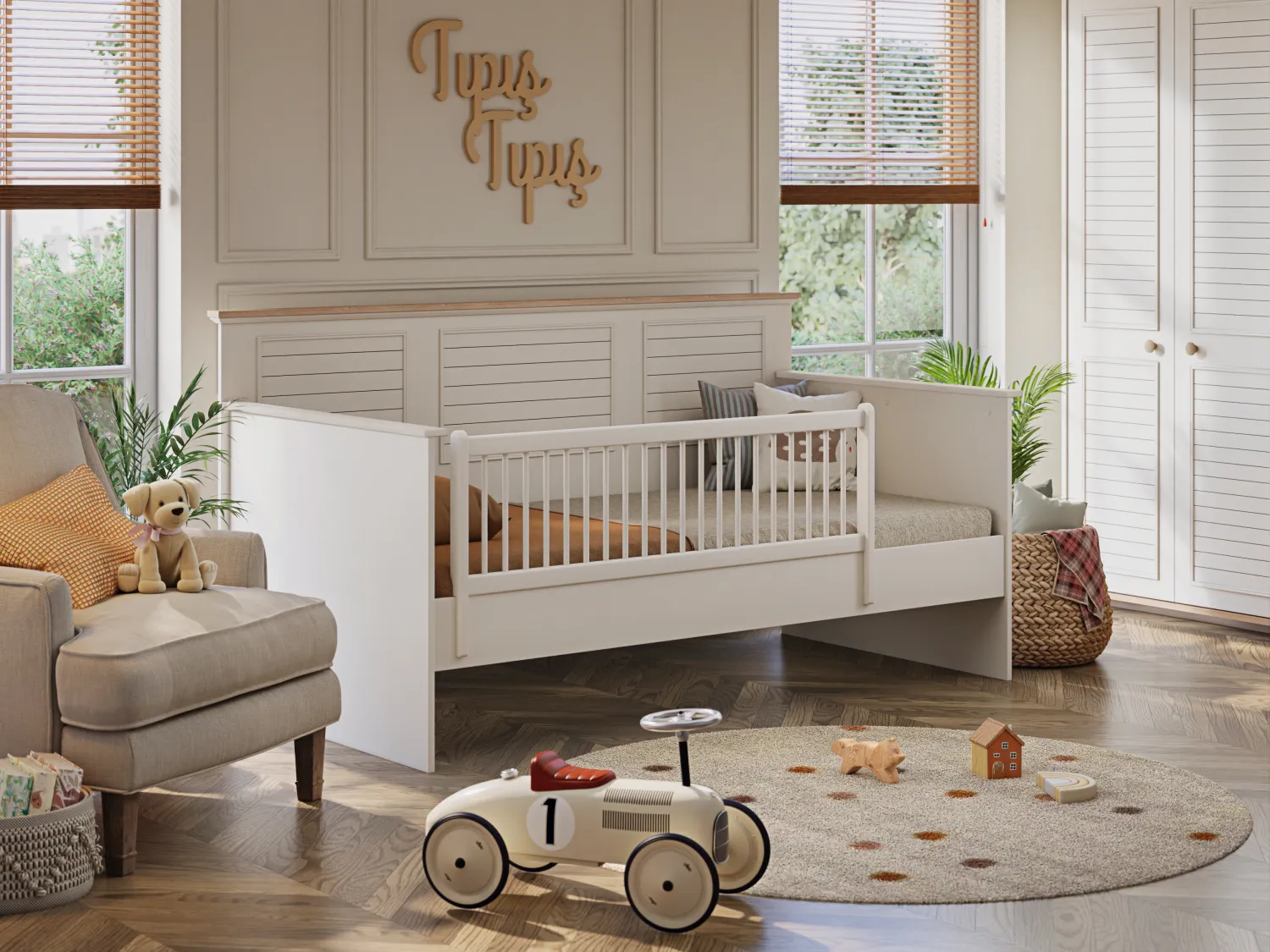
The best-known feature of a Montessori room is the low bed the baby can get in and out of on their own. Instead of classic high cribs, modular designs that convert to a low form as the child grows make this transition easier. Modular solutions like those in Newjoy's Polo series, converting from crib to low bed, are a practical way to spread the Montessori transition across years with a single product.
Child-Height Furniture, Child-Reach Belongings
The essence of Montessori is hidden in one sentence: "Bring the child's world down to their height." Books should sit on low, visible shelves rather than behind cabinet doors; toys in reachable baskets. A mirror, a hook, a shelf at the child's level plants the first seeds of "I can do it myself."
Simplicity and Order
A Montessori room should be simple, not crowded: few but carefully chosen toys, calm colors, a clear order. Newjoy's Flow series, with its design approach that frames the room as a space of development, is a natural match for this principle. For families who love natural textures and soft lines, the Bohem line with its arched forms offers a similar calm.
Safety: The Precondition of Freedom
Since the baby moves freely in a Montessori room, the safety standard is even more critical than in classic rooms: rounded corners, wardrobes that can be anchored to the wall against tipping, soft-close mechanisms that don't trap fingers, and certified child-safe paints. Asking for criteria like E1-certified boards and EN 71-3 certified paint when choosing a baby room set ensures this freedom is lived safely.
The Room as a Growing System
A Montessori room is not a one-time project; as the baby grows, shelf heights, bed form and play area should evolve too. Options addressing later ages, like Newjoy's Trend and Areon series, step in at the next stages — so the independence journey that starts with Montessori can continue through the children's room and teen room periods.
Anyone wanting to build a room embracing the Montessori philosophy can explore all baby room models and make the choice that will accompany their baby's first steps toward independence.