

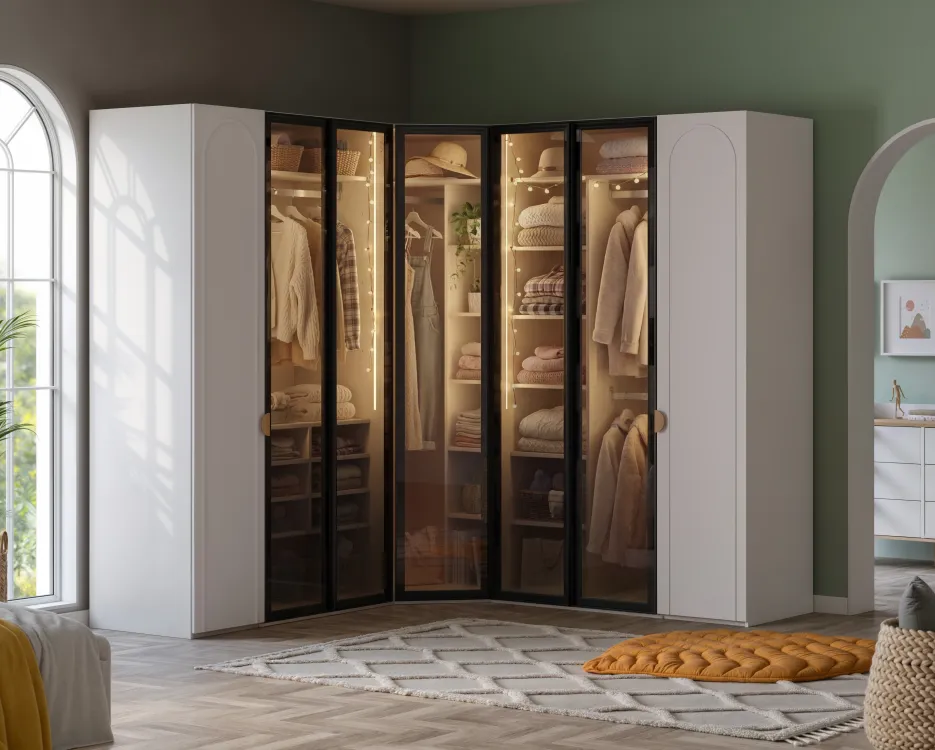
In a children's room, the wardrobe is usually the last piece considered but the first to fall short. Yet a child's belongings grow every year: growing clothing sizes, piling school supplies, changing interests. A wardrobe that seems spacious today starts overflowing within two years. Planning the wardrobe correctly from the start in children's and teen rooms saves the room from years of rearranging. Newjoy's Mood Modular Wardrobe system starts from exactly this need: made of independent modules, it grows or shrinks to fit the room's size.
List the Contents First, Then Measure
Planning should start not with the wardrobe's width but with what goes inside it. Roughly counting how many hanging items (jackets, shirts, dresses), folded items (sweaters, t-shirts), small items (underwear, socks) and school supplies the child has is the only real data that defines the interior layout. Once this list is clear, measure the room's width, height and the positions of doors and windows.
Set the Hanging Height to the Child's Height
In a wardrobe built to adult measurements, a child can't hang their own clothes; the result is jackets thrown on the chair. At young ages, having the hanging rail at a reachable height lets the child keep things in order. Mood's single and double wardrobe modules offer options here: the double-rail module gives two rows for short items, while single-rail and shelved modules balance long and folded items in the same section.
Set Aside a Separate Section for School
At school age, the wardrobe is no longer just for clothes. When no separate space is defined for bags, books, notebooks and sports gear, they pile up on the desk and floor. The 20 and 35 cm wardrobe bookcase modules in the Mood system make books and school supplies part of the wardrobe, solving the biggest source of clutter in the room.
Balance Drawers and Shelves by Age
At a young age, drawers are the most practical storage a child can reach on their own; as they grow, the need for shelves and hanging space increases. That's why being able to change the wardrobe's interior later matters. Mood's interior options, such as shelves, drawers, hanging rails and trouser racks, allow a wardrobe set up for today's needs to be reconfigured later. Modules with shirt and trouser sections respond especially well to the growing variety of clothes in a teen room.
Don't Waste the Corners
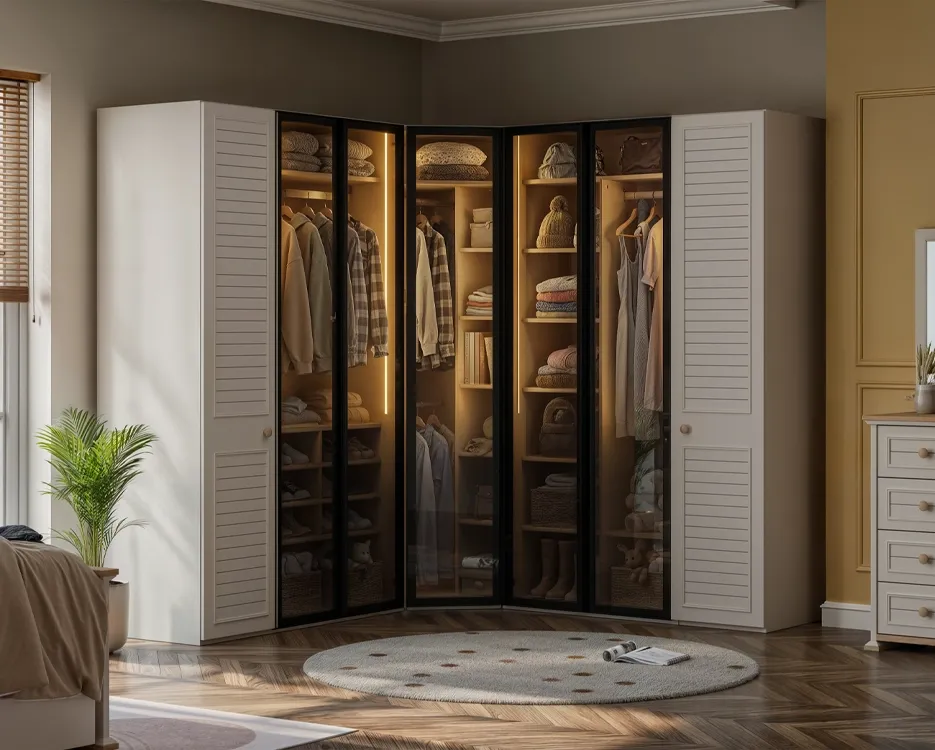
Room corners usually remain dead space. Using a corner module provides significant extra storage in the same square meters; especially in small rooms, putting the corner to use is more efficient than stretching the wardrobe along the wall.
Choose the Doors Together with the Room's Style
The wardrobe is the largest surface in the room, so the choice of doors directly affects the room's overall character. Mood's door options are designed to match Newjoy's collections: Bohem doors for a natural, calm line, Polo for different tastes, and Trend for an energetic style. Reflective glass doors in anthracite and bronze tones add character while making small rooms feel more spacious. An important detail: wardrobe orders cannot be processed without doors, so choosing doors is an integral part of planning.
Safety: The First Criterion in a Children's Room
In a children's room wardrobe, safety comes before aesthetics. Given children's tendency to climb, being able to anchor the wardrobe to the wall is critical; Mood's structure includes an earthquake connection element. Self-closing drawer runners and self-closing door hinges prevent pinched fingers and ensure quiet use.
Materials and Certificates
In a wardrobe used for years, material quality is decisive. Mood uses E1-standard melamine-faced particleboard in 18 and 8 mm thicknesses, with 1 mm PVC edge banding on visible and hand-contact surfaces. Its certificates include E1, documenting formaldehyde levels safe for human health; CE for electrical components; RoHS for paints free of lead and heavy metals; EN 71-3 for surfaces that may come into contact with the mouth; and OEKO-TEX for textile products. Asking about these certificates when choosing a children's room set or wardrobe is the step that's invisible at first glance but makes the biggest difference.
Finish Planning with Room to Grow
In short, the order is: list the contents, measure the room, set the hanging height to the child's height, define a separate space for school supplies, make use of the corners, choose doors to match the room's style and always leave room to grow. Because a modular structure lets you add that room later, it removes the need to replace the entire wardrobe.
If you'd like to plan your own room, explore the Mood Modular Wardrobe system and its modules; if you're thinking about the room as a whole, take a look at the children's room, teen room and baby room collections too.